
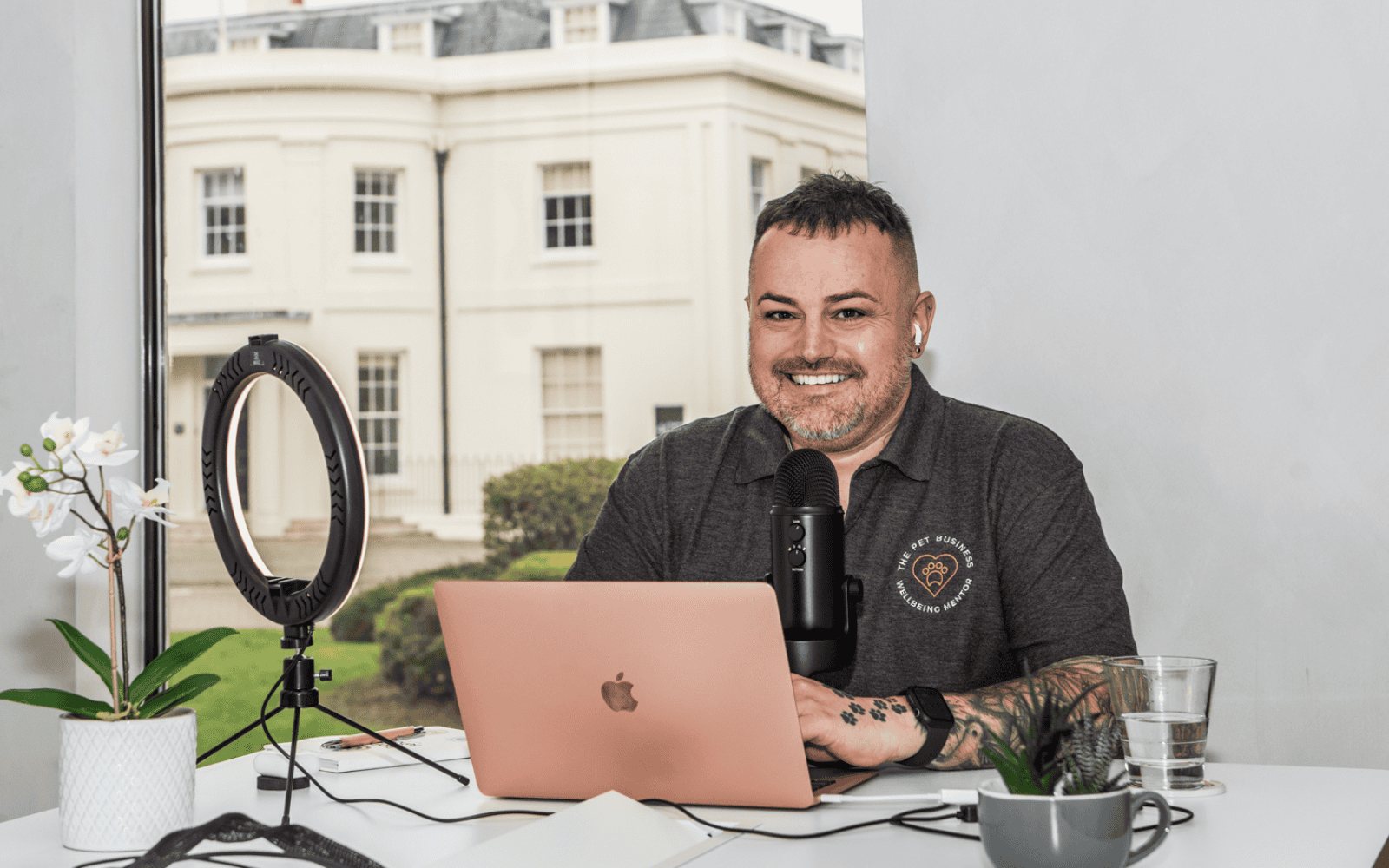
Recently I was invited to speak to a brilliant service-dog community about something a little different from my usual wellbeing chats – how to turn their existing Zoom conversations into a podcast.
They already had hours of gold-dust discussions sitting on YouTube – support calls, Q&As, expert chats – but only the people who had time to sit and watch the videos were benefiting. So, we talked about how to repurpose those chats into a podcast that their community could pop in their ears while driving, doing the dishes, or walking the dog.
If you’re running regular online calls, lives, or webinars and thinking, “Could this be a podcast?” – the short answer is: yes. And it doesn’t have to be complicated.
Let’s walk through how I do it and how you can, too.
Why turn your chats into a podcast?
A podcast is simply another way of sharing the support you already give. You’re not starting from scratch – you’re repackaging what you’re already saying.
A podcast helps you:
- Reach people where they are – in the car, on a walk, lying on the sofa with a hot drink and zero desire to look at another screen.
- Cater to different learning styles – some people love video, others prefer audio, some like to read. A podcast gives listeners another doorway into your work.
- Build connection and trust – people literally hear your voice in their ears. Over time, that builds a sense of relationship that a static post never will.
- Showcase your values – for this particular group, that meant compassion, support and ethical service-dog training. For you, it might be force-free training, accessibility, or community over competition.
You don’t need a huge audience to “justify” a podcast. If your episodes help even a handful of people feel less alone, that’s a big win.
The tech – keep it simple
Confession: I am not naturally techy. Give me dogs and people any day. So if I can manage this, genuinely, you can too.
Here’s the basic set-up I use:
1. Record the conversation
Most of my guest episodes are recorded on:
- Descript – a podcasting and video tool where you can record straight in the app, or
- Zoom – as a backup if Descript is being temperamental or the guest’s device doesn’t play nicely.
You absolutely do not need fancy kit to start. If you want to upgrade, I use a Blue Yeti microphone, but you can begin with a decent pair of headphones and your laptop.
2. Edit without tears
This is where Descript earns its keep:
- It transcribes your recording into text.
- You can edit the audio by editing the words – delete a sentence from the transcript and it cuts that section of the audio.
- It has optional AI tools to:
- Remove lots of the “umms” and “uhhs”.
- Clean up background noise with “studio sound”.
- Smooth over cuts so it doesn’t sound choppy.
There is a free version with limits, and paid tiers if you want more features.
If you’re using another platform (like Zoom only), you can still edit in basic audio software, it’s just a little more manual.
3. Host and distribute
Once the episode is edited, you need somewhere for your podcast to “live” so it can go out to places like Spotify, Apple Podcasts and Amazon Music.
I use Captivate as my hosting platform. Others use Buzzsprout, Libsyn, or even free options like Media.rss.
Your host will:
- Store your audio files.
- Generate an RSS feed (basically the magical link that podcast platforms use).
- Push your episodes automatically to all your chosen platforms each time you publish.
Set it up once and it runs in the background for you.
Repurposing: one chat, many pieces of content
This is my favourite bit, because it saves so much time.
From one recorded conversation, you can create:
- A podcast episode
- Audio file uploaded to your host → automatically shared to Apple, Spotify, Amazon etc.
- A YouTube video (if you’ve recorded video)
- Download the video file from Descript or Zoom.
- Upload to YouTube – great for people who like to watch, not just listen.
- Show notes
- Descript gives you a transcript.
- I pop that into an AI tool to help me create:
- Episode summary
- Key takeaways
- “What you’ll learn in this episode”
- A blog post
- With a bit of shaping (again using the transcript), I turn each episode into a blog for my website.
- That helps with SEO and gives people who prefer reading a way to access the same content.
- Social media posts & emails
- Quotes, tips and snippets from the episode can become:
- Instagram or Facebook posts
- Graphics with key lines
- A newsletter featuring that episode’s theme
- Quotes, tips and snippets from the episode can become:
One conversation. Multiple touchpoints. Much less energy than starting from scratch every time.
Keeping the podcast human (and aligned with your values)
Tech is important, but it’s not the heart of your podcast – you are.
A few principles I live by:
- Progress over perfection
Perfection is boring. A slightly fizzy, real-life conversation is far more relatable than something that sounds like it was recorded in a sterile studio with zero personality. - Lead with compassion and support
For the service-dog community I was chatting with, that meant:- Pushing back gently against toxic, “my way or the highway” attitudes.
- Normalising things like adolescent chaos instead of telling people to “wash” their dog the minute they make a mistake.
- Echoing their CAKES values – compassion, awareness, knowledge, empathy, support.
- Remember the human behind the business
The Pet Business Wellbeing Podcast exists because so many pet pros are burnt out, lonely and questioning themselves. The same is often true for service-dog handlers and disabled-run businesses.
A podcast is a brilliant place to say, “You’re not the only one feeling like this and no, you’re not failing.”
What about when the numbers are small?
This comes up a lot.
Downloads look a bit sad. Your YouTube views are modest. It’s easy to wonder, “What’s the point?”
Here’s what I shared with the group and what I tell my mentees all the time:
- Celebrate the small wins loudly
One new listener who messages to say, “This really helped me” is worth more than 10,000 anonymous downloads.
Someone you don’t know signs up for your freebie? That’s a ta-da moment. - Start a Ta-Da List (or book)
Instead of just a never-ending to-do list, keep a Ta-Da list of everything you have done:- “Uploaded first episode.”
- “A stranger found my freebie.”
- “Guest said yes to coming on.”
One of my mentees even keeps a dedicated Ta-Da notebook. On the hard days, she can flick back and see how far she’s come.
- Let people cheerlead for you
Share your milestones in safe spaces – mastermind groups, mentoring communities, peer groups. Let people say, “well done”. You don’t have to be stoic about your progress.
Sometimes, just continuing to show up is the win. Recording the episode, even if you feel wobbly. Hitting publish. That all counts.
Final thoughts: your voice is needed
If you’re already running community chats, lives, or Q&As, you’re halfway there.
You have:
- The passion
- The knowledge
- The people who need what you’re saying
A podcast simply lets your voice travel a bit further – into cars, kitchens, hospital waiting rooms and woodland walks.
Start simple. Use what you’ve already got. Let your values lead. And remember: it’s not about being perfect – it’s about being present, supportive and human.
If you’d like more support around this kind of thing – balancing visibility, wellbeing and running a pet business – you’re always welcome to:
- Tune into The Pet Business Wellbeing Podcast
- Join my free Facebook community, The Pet Business Wellbeing Circle
- Download the free Pet Pro Rescue Plan
You don’t have to figure it all out alone. 💛
Crazy 2 Calm Canine Coaches Links:
