
What happens when you’re running a pet business…
…but your brain is battling ADHD, your body is dealing with chronic pain and your energy levels change from one day to the next?
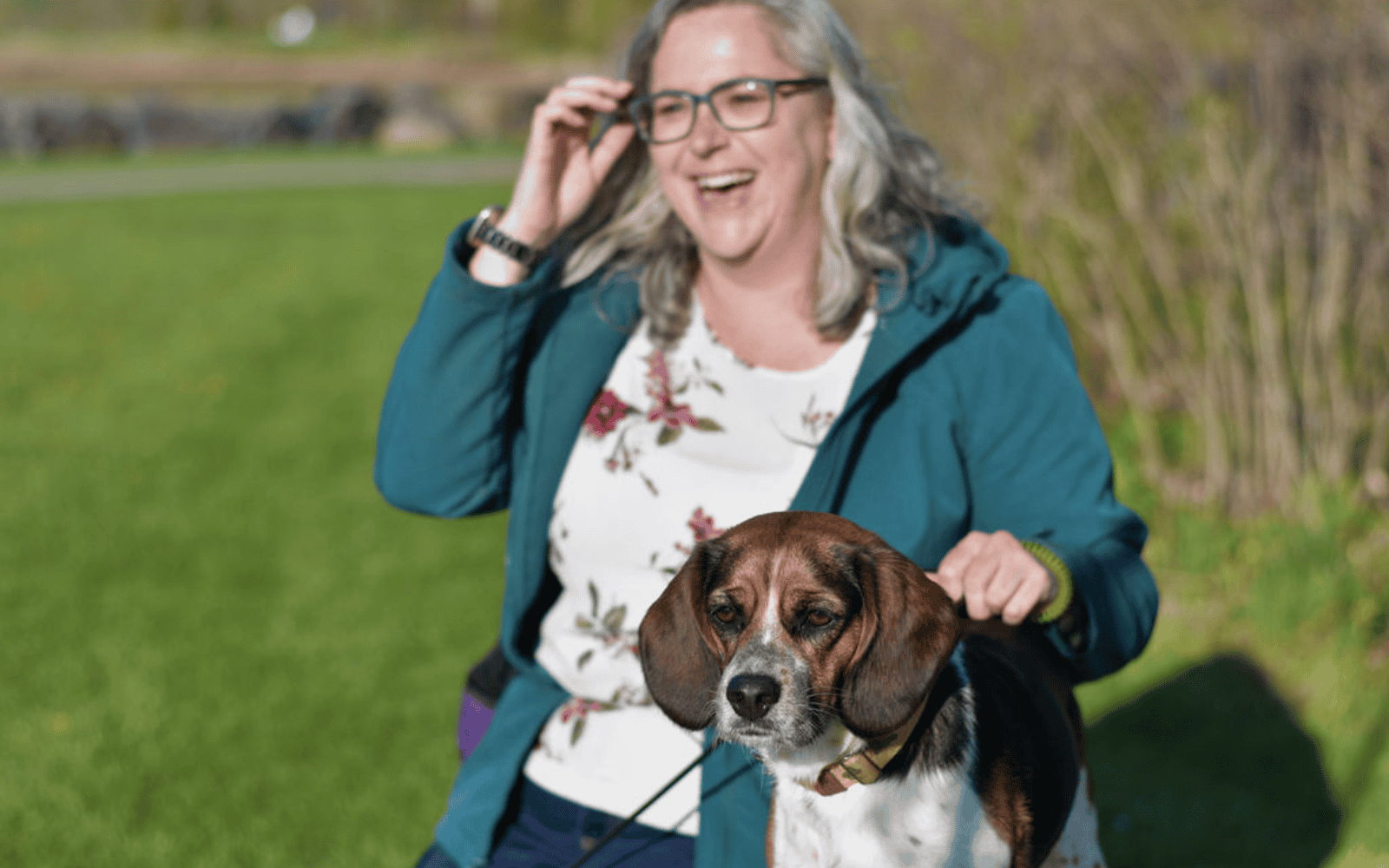
In this episode of the Pet Business Wellbeing Podcast, I was joined by my first international guest, Amanda VanTassel from Canada, dog trainer, mentor and soon-to-be private dog park owner.
What followed was a deeply honest conversation about something many pet professionals quietly struggle with – trying to run a successful business whilst managing health challenges.
Because the reality is this:
You can love the pet industry…
…and still have days where everything feels heavier.
What “bad days” can actually look like
When people talk about wellbeing in business, the conversation often stays quite surface level.
But Amanda shared something incredibly real.
Some mornings start with:
• intense fatigue
• brain fog
• chronic pain
• sensory overwhelm
• struggling to complete simple tasks
Even things like putting socks on can feel difficult when your body is dealing with pain and inflammation.
Yet at the same time…
There’s still a business to run.
Clients to support.
Dogs to help.
That pressure can make many pet professionals feel like they’re somehow falling behind.
But as Amanda shared, the key isn’t pushing harder.
It’s working differently.
ADHD, late diagnosis and the grief nobody talks about
One of the most powerful parts of our conversation was Amanda sharing her late ADHD diagnosis at age 38.
For many adults, diagnosis brings relief.
But it can also bring grief.
Because suddenly things start making sense:
• struggles at school
• feeling “different” growing up
• burnout in previous careers
• coping mechanisms that stopped working
Amanda described the moment her brain finally quietened after starting medication.
For the first time, she experienced something many people take for granted:
Being able to focus on one thought at a time.
And that moment changed everything.
The burnout pattern many pet professionals repeat
Before entering the dog industry, Amanda worked in the energy sector and burned out three times in eight years.
When she began noticing the same patterns appearing in her dog training business, she recognised the warning signs early.
Things like:
• hyperfocus and overworking
• constantly pushing through exhaustion
• struggling to switch off
• ignoring physical warning signs
Many pet professionals fall into this pattern because they love what they do.
But passion alone isn’t enough to sustain a long career.
That’s where intentional systems come in.
Small changes that make business sustainable
During the episode we discussed several practical ways pet professionals can reduce pressure and protect their wellbeing.
Some of the most impactful changes Amanda made were surprisingly simple.
Tiny wins on brain fog days
Instead of forcing big projects when her brain isn’t cooperating, Amanda focuses on small admin tasks.
Ticking off tiny items on the to-do list creates dopamine and momentum without overwhelm.
Automating wherever possible
Automation removes decisions and mental load.
Things like:
• email templates
• booking systems
• automated client onboarding
• content scheduling
These systems ensure the business keeps running even on harder days.
Getting support (even a little)
Amanda hires a virtual assistant for just two hours per week.
Those two hours take recurring tasks off her plate, including sending her weekly email.
And that small amount of support makes a huge difference.
Sometimes we assume we need lots of help.
But even one or two hours of support can free up energy for higher-value work – or simply rest.
When your body keeps the score
Amanda also shared her experience of chronic back pain caused by degenerative disc disease and nerve damage.
Chronic pain doesn’t just affect physical movement.
It impacts:
• sleep
• mood
• energy
• focus
• resilience
And as we discussed, stress and trauma often show up physically in the body.
Many pet professionals push through pain without addressing the underlying stress.
But ignoring those signals rarely works long term.
Sustainable ambition
One of Amanda’s most powerful pieces of advice was this:
Building a sustainable business isn’t about lowering ambition.
It’s about designing a business that works with your life, not against it.
Sometimes that means:
• simplifying services
• tightening boundaries
• automating tasks
• asking for help
• pacing growth differently
Success doesn’t have to look the same for everyone.
And there is no prize for burning yourself out faster than someone else.
A final reminder
If you’re a pet professional managing ADHD, chronic illness, disability, or mental health challenges…
You are not behind.
You are simply navigating a different path.
And sustainability isn’t weakness.
It’s wisdom.
Want further support?
Nathan:
If this conversation resonated with you, here are some helpful resources.
🧡 Free Pet Pro Rescue Plan
🎙 Watch the podcast on YouTube
💬 Join The Pet Biz Wellbeing Circle
🐾 Free “5 Steps” Guide for Dog Walkers
Amanda:
Website (No Hassle Dog Training)
