
Many pet professionals begin their careers because they love working with animals.
Far fewer begin because they dream of managing accounts, completing administration, learning social media, remembering tax deadlines and running every other part of a small business.
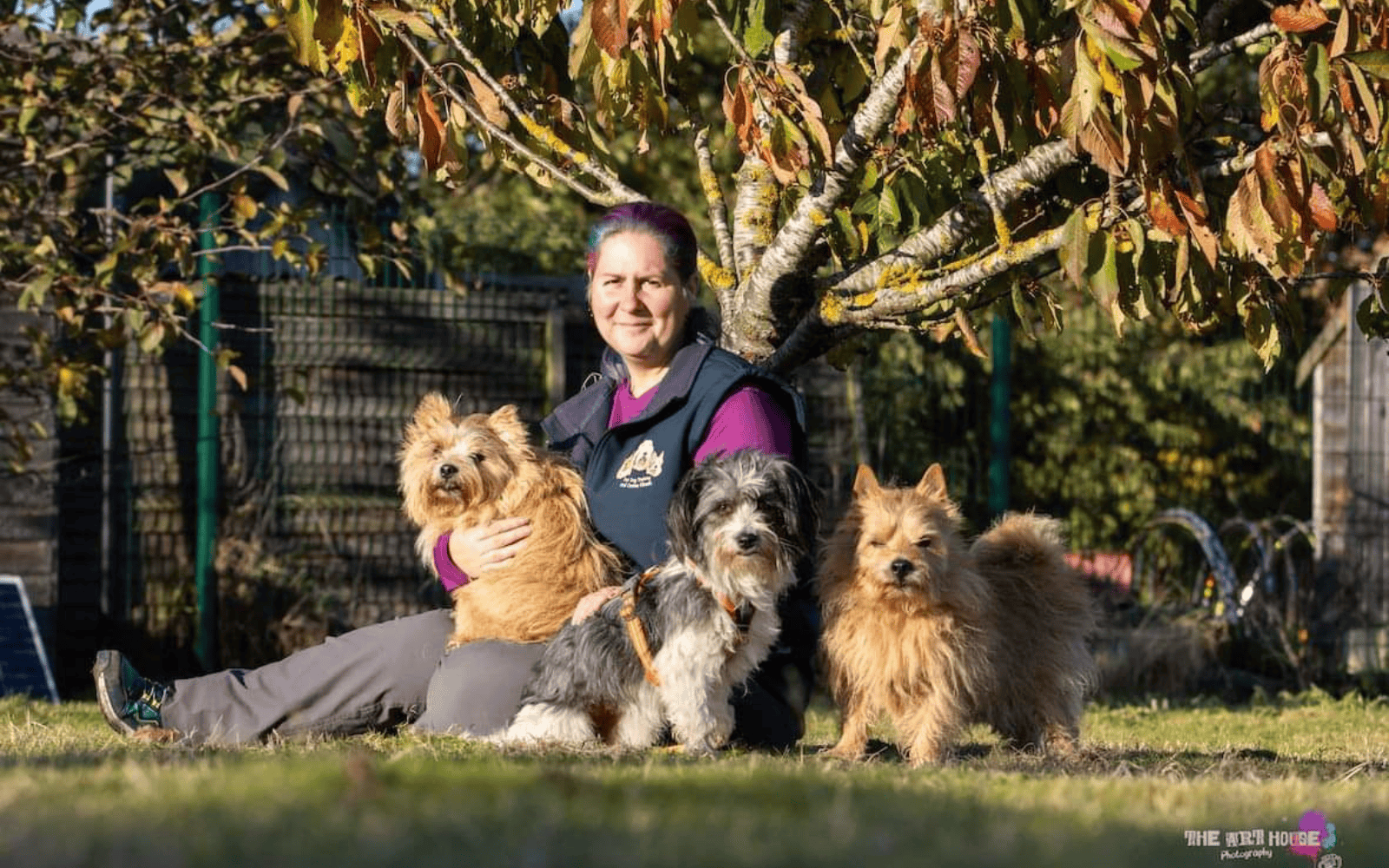
For Joe Nutkins, founder of Dog Training for Essex and Suffolk, becoming a pet business owner was not a carefully mapped-out plan.
It was something she gradually found herself doing.
In this episode of The Pet Business Wellbeing Podcast, Joe shares how her career developed, what more than 20 years in dog training has taught her and how living with chronic illness has shaped both her business and her understanding of animals.
We also hear the unforgettable story of Echo, Joe’s house duck, who learned dozens of tricks, appeared on Britain’s Got Talent and became the world’s first officially titled trick duck.
From Hamsters to Dog Training
Joe did not grow up surrounded by dogs.
Her earliest experiences of animal training came through hamsters, beginning with a neighbour’s hamster called Nibbles.
Joe would allow Nibbles to explore outside the cage and began teaching simple behaviours using food and interaction. She did not realise it at the time, but the foundations of reward-based animal training were already beginning to form.
Years later, Joe brought home her first Norwich Terrier and began exploring how she might build a career involving animals.
At the time, she was working as a magazine designer. The long hours spent at a computer, under strip lighting, were taking their toll, and Joe knew she wanted something different.
An advert offering the opportunity to study dog training caught her attention. Three years of study followed, including dog training, behaviour and counselling skills.
An opportunity to train dogs professionally then appeared and Joe took it.
Realising You Are Running a Business
Joe initially worked for an existing dog training company before being invited to take over the area she managed.
For a while, someone else handled the website, insurance, accounts and other behind-the-scenes responsibilities. Joe continued focusing on what she knew best: working with dogs and people.
When that partnership ended, Joe suddenly found herself responsible for all of it.
She describes carrying on for several years without fully recognising that she was running a business. She trained dogs, received payment and covered the bills, but the wider work of business ownership took time to understand.
This is an experience many pet professionals will recognise.
We often begin because we are good at caring for, training or supporting animals. The skills needed to deliver the service are not the same as those required to manage the business around it.
Marketing, bookkeeping, systems, client communication, scheduling and planning can feel like an entirely separate profession.
Joe found herself learning those skills while already working full-time with clients.
Running a Pet Business with ADHD and Chronic Illness
Jo speaks openly in the episode about living with ADHD, depression, fibromyalgia, ME and chronic pain.
These conditions can affect memory, concentration, energy and the ability to complete administrative tasks consistently.
Joe explains that she can remember how to train dogs and attend her client appointments, but remembering every piece of business administration can be much harder.
There can be a temptation to view these challenges only as obstacles.
However, Joe has also found that her lived experience has strengthened her empathy and observation.
Because she understands what it means to continue functioning while in pain, she is able to recognise how animals may do the same.
A dog experiencing discomfort may not cry, limp or stop moving completely. They may subtly shift their weight, alter how they sit, avoid certain surfaces or compensate through another part of the body.
Joe’s own experience allows her to notice and explain these possibilities to guardians with genuine understanding.
What Is Canine Fitness and Conditioning?
Joe is also a Certified Professional Canine Fitness Trainer.
Her interest began when she wanted to better understand canine anatomy, movement and the physical needs of ageing dogs.
She initially completed a six-week canine conditioning course, then progressed into a year-long professional certification.
Joe began applying what she was learning with dogs experiencing muscle wastage, mobility issues and long-term health conditions. Seeing dogs regain strength and confidence made her passionate about incorporating fitness and conditioning into her work.
Canine conditioning is not simply for injured or older dogs.
It can support:
- Puppies developing body awareness
- Adult dogs maintaining strength
- Sporting dogs working safely
- Dogs recovering after professional rehabilitation
- Senior dogs maintaining mobility
- Dogs at risk of joint or muscular problems
Joe works with dogs from puppyhood through to advanced age, including dogs whose guardians want to begin preventative strengthening before a problem develops.
Prevention Before Crisis
One of the clearest themes in Jo’s work is the value of preventative support.
She shares the story of Merlin, one of her Norwich Terriers, who was diagnosed at a young age with bilateral luxating patella.
Joe was initially told that surgery would probably be required within a few years.
Instead, she introduced carefully selected conditioning exercises, management strategies, supplements and professional therapies.
At 14 and a half years old, Merlin had remained at grade one and had not needed surgery.
This does not mean exercise can replace veterinary diagnosis or treatment.
It demonstrates the potential value of carefully planned professionally guided strengthening and ongoing monitoring.
Joe is clear that people should not copy exercises from social media simply because another dog appears to have a similar condition.
An exercise that is appropriate for one dog may be ineffective or harmful for another. Positioning, flooring, equipment, speed and the individual dog’s diagnosis all matter.
Advocating for Our Dogs
Dogs cannot tell a veterinary professional exactly where something hurts.
They may also behave very differently during a veterinary consultation because they are anxious, highly excited or experiencing an adrenaline response.
That can make subtle pain difficult to identify during a short appointment.
Joe encourages guardians to collect useful evidence when they notice something different.
This might include:
- Videos of changes in movement
- Notes about when the behaviour occurs
- Information about surfaces the dog avoids
- Changes in posture or weight distribution
- Details of activities that appear harder
- A record of how long the change has been present
She also believes guardians should feel able to request another opinion or ask for a suitable referral when a problem continues.
This is not about criticising veterinary professionals. It is about recognising that guardians, trainers, therapists and vets may each observe different parts of the picture.
Collaboration gives the dog the greatest chance of receiving appropriate support.
Echo, the Trick-Performing Duck
Joe’s work has never been restricted to dogs.
Her home has included chickens, ducks, quail, ferrets, canaries and parrots.
One of the most memorable animals in Joe’s life was Echo, a Khaki Campbell duck who hatched alone and imprinted on Joe.
Because Echo could not immediately join the outdoor ducks, she lived inside and became a house duck.
During the pandemic, Joe was filming online training content with her dogs. Echo watched the sessions and began responding to some of the same hand movements.
Joe experimented with using sweetcorn and peas as reinforcement.
Echo soon learned to spin, perform a nose touch, weave, move around Joe’s legs and complete many other behaviours.
Eventually, she learned between 30 and 40 tricks.
Echo earned novice, intermediate and advanced titles through Do More With Your Dog, becoming the world’s first officially titled trick duck. She later appeared on Britain’s Got Talent.
Echo’s story demonstrates that the principles of ethical, reward-based training can extend far beyond dogs.
It also shows what can happen when we remain curious about what an animal is capable of learning.
What Animals Teach Us About Slowing Down
Towards the end of our conversation, I asked Joe what animals have taught her about herself and the way she runs her business.
Her answer centred around patience, slowing down and noticing what is happening in front of us.
Joe recalled becoming frustrated when her dog Taylor would not get out of the car while she was running late.
Taylor responded with an exaggerated yawn.
Having recently learned more about canine stress and calming signals, Joe recognised that she had transferred her own urgency and frustration onto him.
The yawn caused her to stop, breathe and approach the situation differently.
It is a lesson that reaches far beyond dog training.
How often do we rush because we are late, overwhelmed or trying to complete too many things at once?
How often do our animals, clients or bodies signal that the pace is becoming too much?
Slowing down is not the same as giving up.
Sometimes it is the most useful action we can take.
Building a Business Around Real Life
Joe’s journey is not a story of creating a perfectly organised business and following the plan without interruption.
It is a story of adapting.
She has built a long-standing career while managing health conditions, learning new skills, changing services and continuing to study the animals in front of her.
Her experiences remind us that sustainable business ownership is not about copying someone else’s routine.
It is about creating systems, services and expectations that reflect our own health, capacity, values and lives.
The person behind the business matters.
And sometimes, the things that make our journey more complicated also give us the insight that makes our work distinctive.
Listen to the Full Conversation
Listen to Joe’s full episode of The Pet Business Wellbeing Podcast to hear more about:
- Her 20-year dog training career
- Living and working with chronic illness
- Canine fitness and conditioning
- Recognising possible pain in dogs
- Vulnerable native dog breeds
- Training different animal species
- Echo’s Britain’s Got Talent experience
- What animals have taught Jo about patience
Find Out More About Joe Nutkins
Circle+ Membership Is Now Open
The Pet Business Wellbeing Circle+ is my new group mentoring membership for pet professionals who want to build a calmer, more sustainable business without neglecting the person behind it.
Membership includes:
- Two live group mentoring sessions each month
- Business and wellbeing support
- A private community away from Facebook
- Guest experts
- Monthly themes
- A growing resource library
- Replays and ongoing support
Founding membership closes at midnight on Monday 27 July 2026.
You can find out more and join here
