
Running a pet business can be incredibly rewarding.
It can also be incredibly hard.
Both things can be true at exactly the same time.
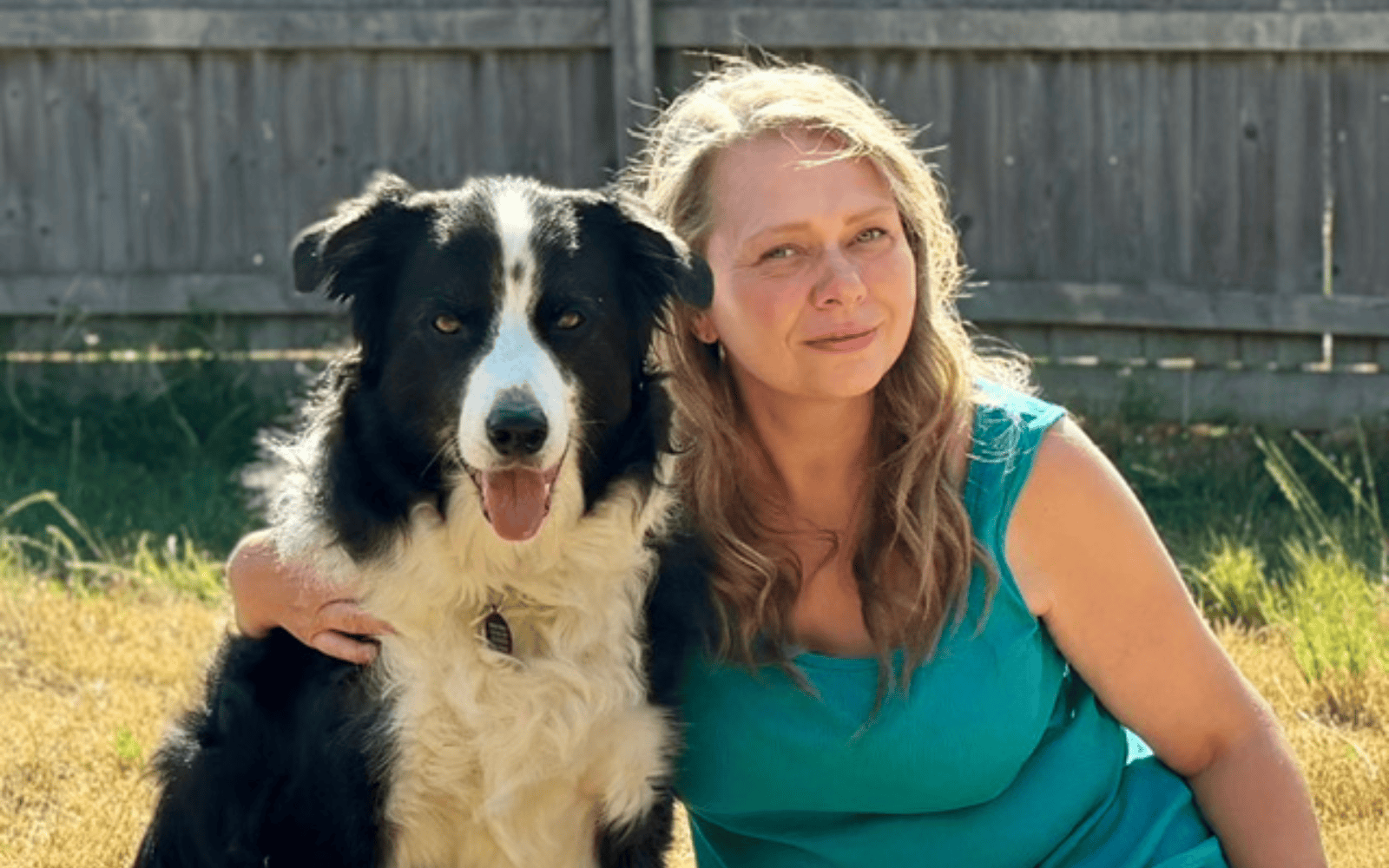
In the latest episode of The Pet Business Wellbeing Podcast, I spoke with Becky Walker, founder of B Pawsitive, a force-free positive reinforcement dog trainer and advanced canine behaviour specialist based in Grantham.
Our conversation began with Becky’s journey into dog training but quickly became something much wider.
We talked about ethics, force-free training, imposter syndrome, professional loneliness, continual learning and those moments when the security of a “proper job” can suddenly look rather appealing.
From Estate Agency to Dog Training
Like many of the pet professionals I speak to, Becky did not begin her career expecting to run a dog training business.
She previously worked with horses before moving into retail and eventually estate agency and the corporate world.
There were targets.
Pressure.
Security.
And, importantly, paid holidays.
Something both of us admitted we occasionally miss!
But Becky had always loved animals.
One particularly important dog in her life was Poppy, a Collie cross Springer Spaniel who struggled with what Becky would now recognise as reactivity.
At the time, Becky was not a trainer and did not fully understand what was happening.
After Poppy died at 13, Becky initially decided she did not want another dog because she did not want to go through that experience again.
Eventually, however, she welcomed Border Collie Brody.
And that changed things.
A colleague who was also a dog trainer encouraged Becky to attend training classes.
She became fascinated.
Becky subsequently spent around two and a half years shadowing trainer Fiona from Ruff Diamonds and gradually realised that helping people understand their dogs was something she wanted to pursue professionally.
Building B Pawsitive
When the pandemic arrived, Becky lost her job.
Through a Jobcentre business support scheme, she was able to develop a business plan and receive some support towards getting started.
And B Pawsitive was born.
There is even meaning behind the name.
Becky wanted the business to represent positivity and hope for both dogs and their people.
The B also represented Becky and Brody.
Initially Becky considered running classes.
But as she learned more, she realised that was not necessarily the business she wanted.
She preferred one-to-one work.
That gave her more opportunity to understand an individual dog and guardian, particularly where anxiety, reactivity or overwhelm might make a group environment difficult.
This is something I think is worth highlighting for anyone building a pet business:
You don’t have to offer something simply because everyone else does.
One of the privileges of running your own business is being able to decide what kind of work you actually want to build it around.
Sometimes Old-Fashioned Word of Mouth Still Wins
Like most of us when starting a business, Becky tried a little bit of everything.
Leaflets.
Facebook.
Business cards.
Local advertising.
But one of the things that helped her business grow most effectively was simple:
Word of mouth.
Her clients had positive experiences and told other people.
It sounds almost too simple in a world of Meta ads, TikTok, algorithms and complicated marketing funnels.
But relationships still matter.
People remember how you make them feel.
And particularly in pet care, trust carries enormous weight.
“It’s Not a Proper Job”
Our conversation moved into something I suspect many dog walkers, trainers, pet sitters and other pet professionals have heard.
Someone will inevitably say:
“I’d love to walk dogs all day.”
Or:
“It must be lovely just playing with dogs.”
Anyone working professionally with animals knows there is rather more involved.
Becky still has around 10 longstanding dog walking clients alongside her training work, many of whom originally came to her because their dogs were not suited to conventional group walking.
We talked about responsibility, canine body language, handling skills, first aid, risk assessment and knowing how to respond when something unexpected happens.
Working with dogs is enormously enjoyable.
But enjoyment does not make something unskilled.
Why Force-Free Training Matters to Becky
One of the central parts of our conversation focused on Becky’s training philosophy.
She is very clear that she works using force-free, positive reinforcement methods.
For Becky, this is fundamentally about ethics and welfare.
The dog’s wellbeing comes first.
Then the wellbeing of the guardian.
She wants clients to feel supported and guided rather than judged.
And she wants the relationship between human and dog to be based on trust rather than fear.
That can sometimes feel challenging when other approaches remain highly visible.
But Becky has made the decision to be very clear about what she stands for.
Her website, conversations with clients and professional memberships all reinforce those values.
That clarity also means people can decide whether she is the right professional for them.
The Problem With Quick Fixes
We also discussed the culture of immediacy that surrounds us.
Shopping can arrive the same day.
Food can arrive at the press of a button.
Social media gives us 10-second before-and-after videos.
Naturally, some guardians start looking for the same kind of quick result with dog behaviour.
But behaviour rarely works like that.
Becky is upfront with clients:
She does not have a magic wand.
There may not be an instant solution.
Training may require patience, understanding and consistent work.
But the goal is not simply to suppress behaviour as quickly as possible.
It is to understand what is happening and help both the dog and guardian move forward in a way that protects their relationship.
Continual Learning and “Shiny Course Syndrome”
Dog professionals love a course.
Amanda and I joked about this in the previous episode and Becky and I found ourselves doing exactly the same thing.
You see another webinar.
Another diploma.
Another behaviour course.
And before you know it, your inbox contains three courses you have not started and another four you have only half completed.
Becky has studied with several organisations and is continuing to develop her knowledge, including working towards further Level 5 and 6 study.
She feels strongly that keeping up with research matters because our understanding of dogs continues to develop.
CPD matters.
But perhaps we also don’t need to enrol on everything.
I say that as someone with his own graveyard of unfinished courses.
You Don’t Need to Know Everything Yourself
Another important part of Becky’s story is the role of professional support.
She is involved in the Pet Professional Guild behaviour teams pilot scheme.
Becky explained that her local team brings together professionals who share force-free ethical standards.
That creates somewhere to:
- Refer clients
- Discuss difficult cases
- Seek another perspective
- Collaborate
- Recommend trusted professionals
- Feel less alone
That last point matters.
Running a pet business can be surprisingly lonely.
You might spend your entire day surrounded by clients and animals but still make most business decisions alone.
Having people who understand what you are dealing with can become a professional safety net.
Becky described knowing that if she refers someone to another member of her team, she trusts that their ethical standards align with hers.
Imposter Syndrome in the Dog Industry
We eventually came to imposter syndrome.
It appears frequently in conversations I have with dog professionals.
You complete another qualification.
You gain another five years of experience.
You help another hundred clients.
Yet somehow, part of your brain still wonders:
“Am I actually good enough?”
Becky suggested something interesting.
Perhaps some degree of questioning ourselves comes from caring about doing things well.
We want to know whether we could have done something differently.
Whether we have missed something.
Whether there is more we should learn.
Of course, that self-reflection becomes unhelpful when it turns into constantly undermining ourselves.
But wanting to improve is not evidence that you are an imposter.
“Maybe I Should Just Get a Proper Job”
Becky was wonderfully open about something else.
She thinks about giving up fairly regularly.
There are weeks when the idea of:
- A reliable salary
- Paid holiday
- Sick pay
- Predictable hours
- Not receiving messages at strange times
sounds incredibly appealing.
I understand that.
There are moments in self-employment when you remember everything you used to receive as an employee and wonder what on earth possessed you to give it up.
But then Becky remembers what the alternative would mean for her.
She values being responsible for her own diary.
She values the work.
She values the difference she makes.
And importantly, she knows that if ethical professionals leave the industry, guardians have fewer ethical professionals to choose from.
If You Help One Person and One Dog
Towards the end of the episode I asked Becky what she would say to a dog professional who loves their work but is exhausted, doubting themselves or quietly considering giving up.
Her answer was incredibly human.
She spoke about support.
Learning.
Looking at other people’s successes as inspiration rather than evidence that you are falling behind.
Remembering the positive feedback.
Remembering the clients who recommend you.
And remembering the difference you’ve made.
For Becky, it eventually comes down to something very simple:
Even if she makes a difference to one person and one dog, that’s enough.
I think that’s a message worth holding onto.
We can get very focused on numbers in business.
More followers.
More clients.
More revenue.
More qualifications.
More growth.
But somewhere amongst all of that are individual people and animals whose lives are different because you showed up.
And perhaps sometimes we need to remember them.
Listen to the Full Conversation
You can listen to my full conversation with Becky Walker from B Pawsitive on The Pet Business Wellbeing Podcast here
Find Becky:
Join My Free Webinar 🌿
If the parts of this conversation around overwhelm, imposter syndrome and building a sustainable business resonate with you, I’d also love to invite you to my first free webinar:
Why Pet Pro Wellbeing Is Essential for a Sustainable Business
📅 Thursday 20th August 2026
🕖 7pm UK time
🎟️ FREE
We’ll explore why wellbeing isn’t something separate from your business.
It affects your boundaries.
Your decisions.
Your workload.
Your relationships.
And ultimately your ability to continue doing the work you care about.
If you can’t make the live session, register anyway and the replay will be sent afterwards.
👉 Register here
I’ll also be sharing a little more about The Pet Business Wellbeing Circle+ during the webinar and there may be a cheeky opportunity to join sooner than originally planned.
