
Dog sport is supposed to be fun.
A shared activity.
A way to strengthen the relationship between human and dog.
But what happens when pressure, performance and perfectionism begin to take over?
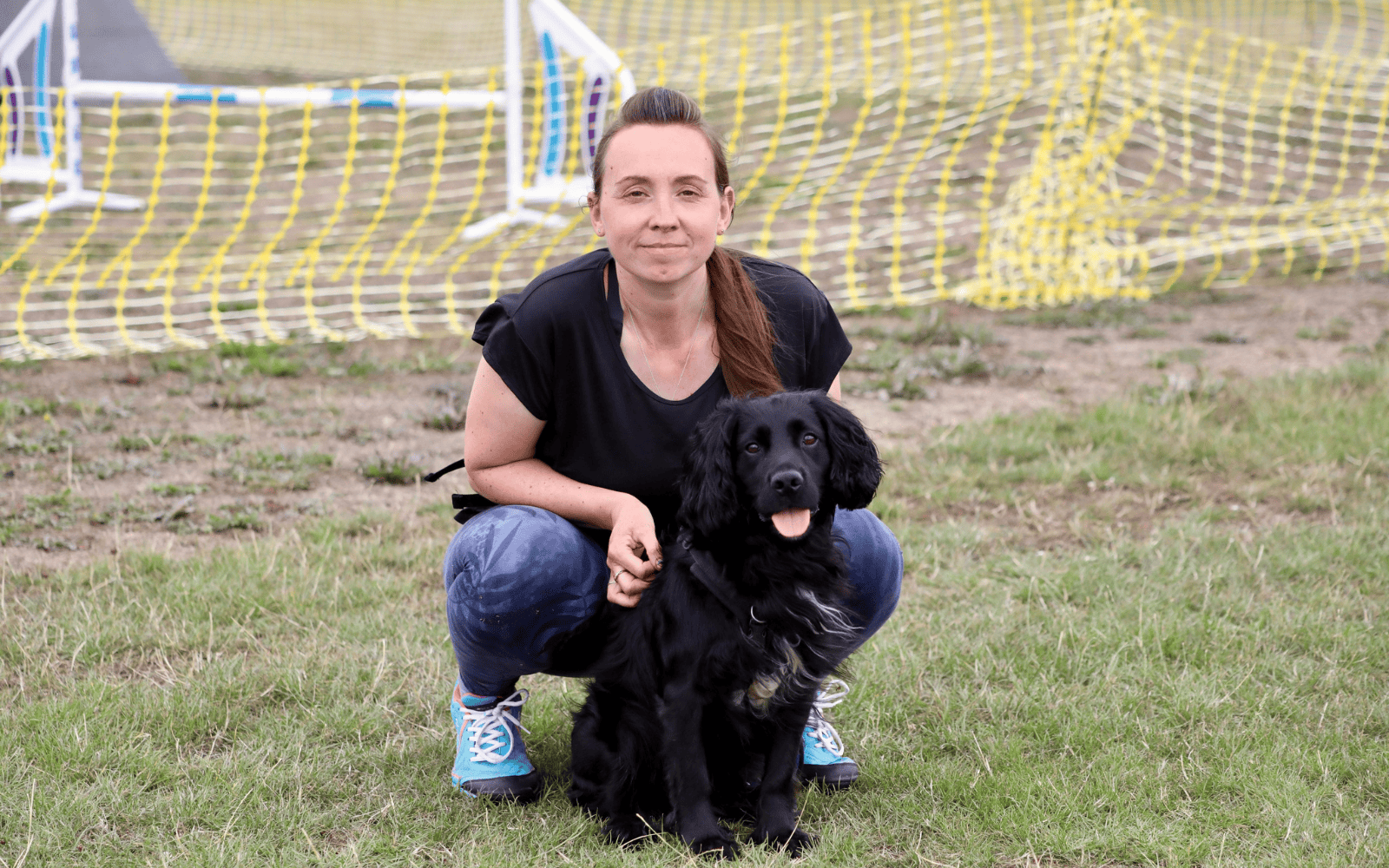
In the latest episode of The Pet Business Wellbeing Podcast, I was joined again by my good friend and colleague Katrina Bayliss, The Neurodivergent Dog Coach.
This time, we focused on her new book:
The Dark Side of Dog Agility: Navigating Neurodivergence in a Sport Rooted in Success
And despite the title, this is not simply a book about agility.
It is about people.
Dogs.
Belonging.
Success.
Masking.
Pressure.
Connection.
And what happens when the environments we build are not equally accessible to everyone.
Why Katrina Needed to Write This Book
Katrina explained that the book sits between two very important chapters of her work.
Her first book, Milo: The Dog That Gave Me It All, explored the dog who changed the direction of her life and ultimately brought her into the dog world.
This second book looks at Katrina’s experience as a late-diagnosed neurodivergent person working within that world.
And her next book will move more into the question of:
What do we actually do differently?
Katrina said this second book needed to exist before the third could make sense.
But there was another reason too.
People kept telling her that she was saying things they had felt but had never been able to put into words themselves.
That matters.
Because sometimes the value of a book is not in teaching us something brand new.
Sometimes it is in helping us recognise ourselves.
A Book About More Than Agility
Katrina is very clear that agility is the background rather than the whole subject.
The broader themes apply much more widely.
Performance.
Success.
Comparison.
Pressure.
Feeling different.
Trying to fit in.
Perfectionism.
The fear of doing something “wrong”.
Those things can show up in dog sports, training classes, professional education and even within pet businesses themselves.
Katrina originally intended the book to be much more agility focused.
But after her own neurodivergent diagnosis, the direction changed.
Suddenly, earlier experiences began to make more sense.
When Success Becomes the Goal
There is nothing inherently wrong with success.
There is nothing wrong with competing.
There is nothing wrong with wanting a clear round, a qualification or a rosette.
Katrina enjoys competing herself.
The problem comes when the result becomes more important than the relationship.
When the dog becomes part of a performance rather than a partnership.
When the person starts measuring themselves against everybody around them.
When the original reason for doing the activity gets lost.
This is something I think reaches beyond dog sport.
We do it in business too.
Follower counts.
Revenue.
Client numbers.
Qualifications.
Awards.
Visibility.
Success is often treated as though there is one universal definition.
There isn’t.
Compliance Versus Connection
One of the more thought-provoking parts of our conversation was Katrina’s distinction between compliance and connection.
A dog can technically perform.
They can complete the course.
They can do the behaviour.
They can produce the result.
But that does not automatically mean the partnership feels connected.
And perhaps that is where we need to become more curious.
Not simply:
Did the dog do it?
But:
How did the dog experience it?
And equally:
How did the human experience it?
Katrina argues that if we focus too heavily on results, we can miss the quieter signals from both ends of the lead.
The Human at the Other End of the Lead
Dog professionals are generally very used to adapting for dogs.
Different environments.
Different learning histories.
Different thresholds.
Different motivations.
Different emotional needs.
But are we as good at adapting for humans?
Katrina’s experience suggests there is still a lot of work to do.
After receiving a late diagnosis of autism and ADHD, many of her previous experiences began to make sense.
She had spent years trying to tick boxes.
Gain qualifications.
Follow what she had been told was the “right” path.
Fit into groups.
Gain acceptance.
But the problem was not necessarily a lack of knowledge or effort.
Sometimes the environment simply was not designed in a way that worked for her.
Neurodivergence Is Not a Tick-Box Exercise
One of Katrina’s strongest points is that neurodivergence is individual.
Two autistic people will not necessarily need the same thing.
Two people with ADHD will not necessarily process information in the same way.
There is no universal checklist.
Katrina talks about the danger of assuming:
“This person is autistic, therefore they need X, Y and Z.”
That misses the point.
The aim should be curiosity.
Understanding.
Flexibility.
And creating space where the person can tell you what works for them.
Emotional Safety Matters Too
We talk a lot about physical safety in dog training.
Can the dog get out?
Could there be conflict?
Is the environment appropriate?
Is everyone physically safe?
All incredibly important.
But Katrina raises another question:
Does the human feel emotionally safe?
She described situations where she would watch what other handlers were doing and copy their answers, even when she would have handled something differently herself.
Why?
Because she did not feel safe enough to say what she actually thought.
At that point, she was no longer learning.
She was masking.
And that is something every educator, trainer, mentor and pet professional should think about.
If somebody does not feel safe enough to ask a question, disagree, admit confusion or say they need something explained differently, how much are they really able to learn?
When People Quietly Leave
This was another important part of the conversation.
Not everybody who feels excluded or overwhelmed will complain.
Not everybody will leave feedback.
Not everybody will challenge you.
Some people simply stop coming.
They do not return to the training class.
They do not complete the homework.
They disengage.
And from the outside, they may be labelled lazy, uncommitted or difficult.
But perhaps the environment was not giving them what they needed.
That is a very different conversation.
Neuro-Inclusive Does Not Mean Lower Standards
There can sometimes be a fear that making something more accessible means reducing standards.
Katrina does not see it that way.
Making information clearer.
Providing different ways to learn.
Reducing unnecessary overwhelm.
Creating psychologically safer environments.
Allowing people to process differently.
None of those things make the learning worse.
In many cases, they make it better for everybody.
That is one of the reasons Katrina created the Neuro-Inclusive Dog Professional Network.
It brings together neurodivergent and neurotypical people who want to better understand lived experience and improve how services are delivered across the dog industry.
Kindness, Understanding and Connection
Towards the end of our conversation, I asked Katrina what she most hoped someone would carry away after reading the book.
Her answer was not complicated.
Kindness.
Kindness to yourself.
Kindness to others.
Kindness to the dogs you have worked with.
Then:
Understanding.
Understanding yourself.
Understanding your dog.
Understanding the partnership.
And then:
Connection.
Katrina describes awareness as the first step.
Understanding comes next.
And from there, better connection can naturally follow.
I think that is a message worth carrying far beyond agility.
Because whether we are talking about dog sport, training, business, mentoring or pet care, people are far more likely to thrive when they feel:
Seen. Safe. Supported.
Listen to the Full Episode
Listen to my full conversation with Katrina Bayliss, The Neurodivergent Dog Coach, on The Pet Business Wellbeing Podcast here
Find Katrina –
Dogs & Divergent Minds
The Neurodivergent Dog Coach
Neurodivergent Dog Hub
Neuro-Inclusive Dog Professional Network
Join the Free Pet Pro Reset Experience
The Pet Pro Reset Experience is back from Sunday 20th September at 7pm UK time.
Across four consecutive evenings, we’ll explore some of the things that can make running a pet business feel heavy:
Overwhelm.
Boundaries.
Capacity.
Switching off.
And creating something that feels more sustainable.
It is completely free. Join here.
