
Changing direction can feel uncomfortable.
When we have invested months or years building a service, business or career, deciding that it no longer fits can very quickly trigger thoughts such as:
Have I failed?
Did I waste all that time?
What will everybody else think?
Should I just keep going?
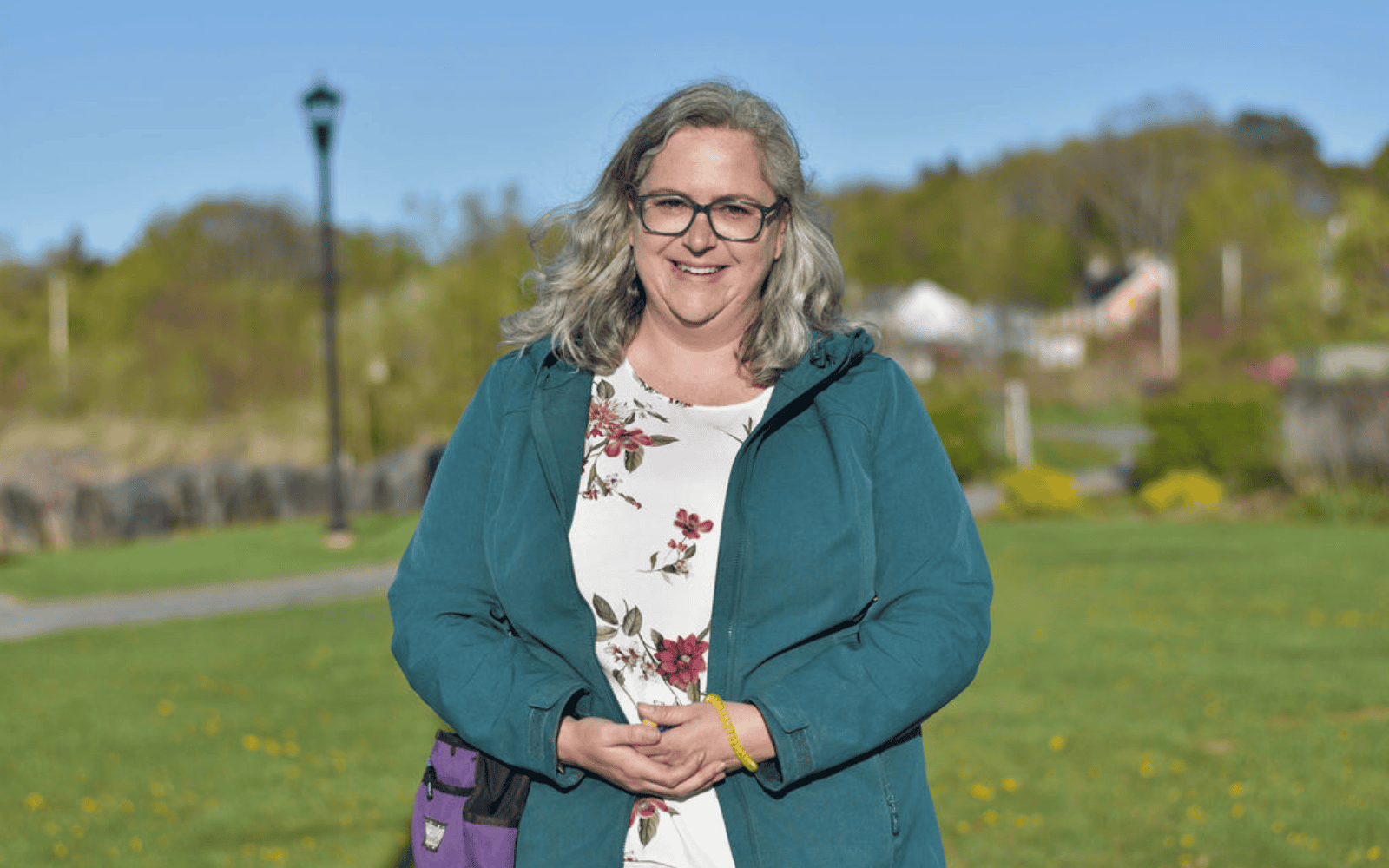
In the latest episode of The Pet Business Wellbeing Podcast, I explored exactly this with my friend and colleague Amanda VanTassel, founder of No Hassle Dog Training in Canada.
Amanda suggested that we talk about pivoting without treating it like a failure.
It is a subject both of us know something about.
Neither Amanda nor I began our working lives expecting to end up where we are now.
Amanda previously worked in the energy industry before moving into dog training.
I spent more than a decade working in corporate and business banking before eventually building my own pet care businesses and moving into mentoring.
Our careers changed.
Our businesses have changed.
And they will probably continue to change.
That does not erase what came before.
Ask Yourself What You Want to Be When You Grow Up
Amanda shared a piece of advice given to her by a former manager:
Never stop asking yourself what you want to be when you grow up.
She was already well into her thirties and progressing through a corporate career when the answer unexpectedly changed.
For years, she had wanted to continue climbing the ladder.
Then she began thinking about creating a ranch-style doggy daycare.
That eventually led her into dog training.
And then something interesting happened.
She realised she did not actually want the daycare anymore.
Dog training itself had become the thing she wanted.
The original idea had served its purpose.
It had pointed her towards something else.
That is an important lesson for business owners.
Not every idea has to become the final destination.
Sometimes it simply gets you moving.
Pivoting Is Not Always a Crisis
The word pivot became particularly popular during the pandemic.
I remember being told repeatedly that I needed to pivot my dog walking business and take it online.
My response was fairly straightforward:
How exactly am I supposed to walk a dog online?
But circumstances eventually did force me to rethink things.
When lockdown happened, my dog walking business virtually disappeared overnight.
Rather than being able to simply recreate dog walking online, I invested in myself.
I completed further dog training qualifications and specialised in separation anxiety, something I knew was likely to become increasingly important as people eventually returned to work.
That led to the creation of Nathan’s Paw Training.
The service changed because the circumstances changed.
Looking back, what felt like disruption also opened another path.
You Are Not Starting Again
One fear that often appears when changing direction is the feeling that we are going back to zero.
But very rarely are we actually starting again.
Amanda brought decades of experience with her from the energy industry.
She had developed skills in:
- Customer service
- Presenting
- Educating
- Technical learning
- Communication
- Supporting customers from beginning to end
- Contributing to websites and other business projects
She now uses many of those same skills as a dog trainer and mentor.
The subject has changed.
The underlying capability has not.
I have experienced the same thing.
My previous career in corporate and business banking gave me experience of working alongside business owners, understanding financial decisions, managing relationships and navigating business challenges.
Those skills now inform how I mentor pet professionals.
The previous chapter was not wasted.
It became part of the toolbox.
How Do You Know When Something No Longer Fits?
Amanda described moving from being passionate about her corporate career to gradually recognising signs of burnout and stagnation.
She stopped being able to see the next meaningful step.
Moves felt lateral rather than progressive.
The satisfaction had started disappearing.
Looking back, she could recognise burnout more clearly than she could while she was actually living through it.
Sometimes that is how change begins.
Not with a dramatic moment.
But with an ongoing feeling that something does not fit in quite the same way anymore.
That does not automatically mean you should immediately close a service, resign from a job or completely change your business.
It does mean the feeling may be worth listening to.
Ask yourself:
What has changed?
What am I no longer enjoying?
What am I craving more of?
Is this temporary exhaustion, or has something fundamentally shifted?
Quitting and Pivoting Are Not Necessarily the Same Thing
Amanda did technically quit her corporate job.
But emotionally, she did not experience it as giving up.
She experienced it as moving into another phase.
There was excitement attached to what came next.
That distinction matters.
A conscious pivot is not necessarily:
“This did not work, therefore I failed.”
It may be:
“This chapter has given me what it needed to give me, and I am ready to use it somewhere else.”
Businesses have seasons.
So do people.
Something being right for you five years ago does not automatically mean it must remain right today.
The Sunk Cost Trap
One of the harder situations in business is realising that something may no longer work after investing significant time and money into it.
We can start thinking:
But I’ve already spent £2,000 on this.
I’ve worked on it for a year.
Everybody associates me with this.
That investment can become the reason we stay.
Amanda rightly pointed out that we also need to give ideas a genuine opportunity to work.
Not every difficult month means you need to pivot.
But neither should past investment become the sole reason you continue indefinitely.
Sometimes we need to separate:
“This is difficult because businesses are difficult.”
from:
“This genuinely no longer serves the direction I want to go.”
What Will Everybody Think?
This may be one of the biggest barriers for people pleasers.
What will clients think?
What will colleagues think?
What will other professionals think?
Amanda’s initial answer when I asked her about this was wonderfully simple:
She doesn’t give a damn.
Although, as she acknowledged, getting to that point has taken work.
She describes herself as a recovering people pleaser and still notices the emotional impact when somebody does not like her or agrees with the way she works.
The difference is that she now returns to what she knows:
Her values.
Her identity.
Her client results.
Her own business.
Not everybody needs to agree with our choices.
They are not running our businesses.
When Smaller Is Actually Better
Amanda’s online summit gave us one of my favourite examples of a business pivot.
Her first event involved:
20 experts across 10 days.
When planning the second year, securing another 20 speakers became increasingly difficult.
Her first reaction was emotional.
Perhaps the summit had failed.
Perhaps she should cancel it.
Then she stepped back.
No dates had been publicly announced.
Nobody had been promised 20 speakers.
So she changed the model.
The second summit became:
10 experts across five days.
Half the speakers.
Half the duration.
Approximately half the workload.
Yet Amanda achieved an audience almost as large as the first year and sold almost as much.
What initially looked like a reduction became a much more sustainable version of the offer.
That is something many pet business owners could reflect on.
Do you always need to make something bigger?
Or could smaller actually make it better?
When Your Brain Is Ready Before Your Emotions
Sometimes you know logically that a decision makes sense.
But emotionally?
Absolutely not.
It can still feel terrifying.
Amanda talked about the importance of giving ourselves some grace in that situation.
Major changes can involve fear even when they are right.
Changing career.
Launching something new.
Closing something old.
Putting yourself in front of a new audience.
Building an entirely different service.
The goal does not have to be eliminating fear before moving.
Sometimes the emotional part of us simply needs a little time to catch up with the logical decision we have already made.
What If Your Business Becomes Bigger Than the Original Dream?
Amanda initially thought she would be a dog trainer.
Six years later, her world includes:
- Dog training
- Online work
- Mentoring pet professionals
- A developing private enrichment dog park
- Potential partnerships with organisations supporting people facing employment barriers
The original plan has expanded considerably.
Her dog park idea is even evolving before it has physically opened, with Amanda exploring a potential private/non-profit partnership that could create opportunities both for her business and people supported by another organisation.
That is the other side of allowing yourself to pivot.
Sometimes your business does not become smaller.
It becomes something you could never have imagined when you started.
You Take the Previous Chapter With You
At the end of our conversation, I asked Amanda what she would say to somebody who knows something no longer fits but is scared that changing direction means they have failed.
Her advice was to take a proper look at your existing skills and knowledge.
What have you already learned?
What experience do you already have?
What can you carry into the next thing?
Doing that can take some of the fear out of the unknown.
You are rarely starting from scratch.
You are starting from experience.
And perhaps that is the biggest message from this conversation.
A pivot does not delete the previous chapter.
You carry it forward.
Listen to the Full Episode
Listen to the full conversation with Amanda on The Pet Business Wellbeing Podcast to hear us explore career change, burnout, people pleasing, business evolution, Amanda’s summit, her future dog park and why changing direction does not have to equal failure.
On YouTube and wherever you download your podcasts.
Connect with Amanda
Website
Facebook
Instagram
Pathways to Pet Care on Instagram
Join My Free Webinar
If this conversation has made you think about what may need to change in your own business, I’d also love to invite you to my first free webinar:
Why Pet Pro Wellbeing Is Essential for a Sustainable Business
📅 Thursday 20th August 2026
🕖 7pm UK time
🎟️ FREE
We’ll explore why your wellbeing affects your boundaries, decisions, capacity, client relationships and ultimately your ability to build a business that works for the long term.
Register here
I’ll also be sharing more about The Pet Business Wellbeing Circle+ during the webinar and there may be a short opportunity to join sooner than originally planned.
