
Running one pet business can be demanding enough.
Running several at the same time brings a whole different set of questions.
Where should your time go?
Which idea deserves your energy?
What happens when something you have spent years building no longer fits?
And perhaps most importantly:
Does letting something go mean it failed?
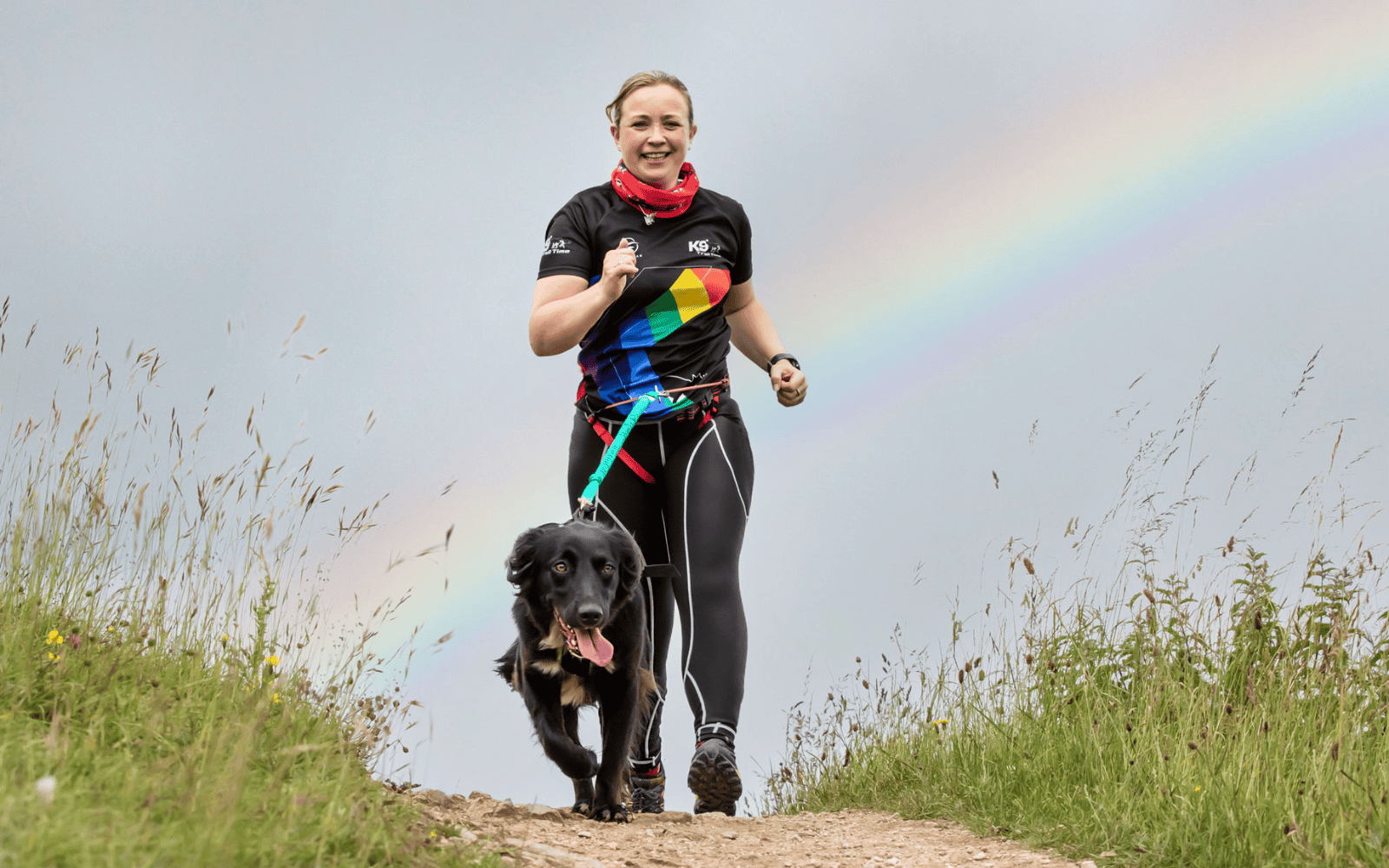
In the latest episode of The Pet Business Wellbeing Podcast, I explored all of this with Emily Thomas, founder of K9 Trail Time, co-founder of Canicross Coach, creator of Active Dog Academy, former hydrotherapy business owner and veterinary physiotherapy student.
It All Started With One Dog
Emily’s journey into the pet industry began with her own dog.
She had adopted a Husky-Collie cross who turned out to be much more challenging than expected.
They tried agility.
They tried conventional training classes.
They tried flyball.
And because of her dog’s reactivity, those environments were not always successful.
Then Emily discovered Canicross.
For the first time, she found an activity where her dog could work alongside other dogs without necessarily having to interact directly with them.
It gave them something to do together.
It strengthened their relationship.
And it eventually changed Emily’s working life completely.
From Wanting Better Harnesses to Building a Business
Emily wanted access to more Canicross equipment.
More brands.
Better-fitting options.
And, importantly, more colours.
She openly admits she likes everything to match.
So she began bringing in equipment.
Initially, she thought friends might buy a few bits.
Then people at events started buying.
And K9 Trail Time began growing.
By 2016, Emily had left her office job and was running the business full time.
Sometimes businesses do not begin with a grand strategy.
They begin with:
“I wish somebody offered this.”
And then you realise perhaps you could be that somebody.
Curiosity Created the Next Chapter
As Emily became more knowledgeable about harness fitting, she became increasingly interested in how dogs move.
Then one of her dogs developed spondylosis.
Emily wanted to understand what might help him, so she began exploring hydrotherapy.
But she is someone who likes to know why.
Why that water depth?
Why that speed?
Why that movement?
Eventually, the simplest way to answer her own questions was to train as a hydro therapist.
That curiosity eventually led to a hydrotherapy business that Emily ran with a partner for around six years.
When a Successful Business No Longer Fits
Last year, Emily stepped away from that business.
Not because it had failed.
Her life had changed.
She had moved to her dream home in South Wales, more than two hours from the hydrotherapy centre.
The part of the work she loved was hands-on.
She wanted to be in the underwater treadmill with the dogs, watching their movement and making adjustments.
Running the business remotely meant spending more time on the part she did not love:
Admin.
Emily could have recreated another hydrotherapy business near her new home.
But that would have involved significant investment, premises and another substantial start-up period.
She already had several other things she wanted to pursue.
And she realised something important:
She needed to let go of some things to create space for what mattered most.
That is something many business owners struggle with.
We assume that because something works, we have to keep doing it.
But success does not automatically create a lifelong obligation.
Juggling Multiple Businesses
K9 Trail Time remains Emily’s main business.
Alongside that sits Canicross Coach, Active Dog Academy and her veterinary physiotherapy studies.
There is a lot happening.
But there is also a clear thread connecting everything.
Emily wants to help dogs remain active for as long as possible.
Canicross provides physical and mental enrichment.
Her retail business helps people use appropriate equipment.
Coaching helps more people access the sport safely.
Canine conditioning supports movement and strength.
Veterinary physiotherapy will eventually allow her to take that knowledge even further.
The businesses might look separate from the outside.
But the purpose underneath them is remarkably consistent.
What Is Canicross?
Canicross is essentially cross-country running with your dog attached to you using specialist equipment.
The dog wears a properly fitted sports harness.
A bungee line connects them to a belt worn by the runner.
Dogs are taught cues for pulling, slowing, changing direction and working with their person.
Emily explains that when it clicks, the dog is not simply exercising next to you.
You are actively working together.
That can provide both physical and mental stimulation and build a really strong shared connection.
Emily is also careful to point out that although Canicross can be brilliant for some reactive dogs, it does not mean every reactive dog should immediately attend a busy group session or race.
Like everything, the individual dog matters.
When Showing Up Online Feels Like Another Job
Emily is fortunate in that she generally enjoys social media.
She documents life with her dogs.
She shares new equipment.
She creates videos.
She educates.
But even when you enjoy it, maintaining visibility can take a lot of time.
There are also days when life is simply happening behind the scenes.
During the week we recorded, two of Emily’s dogs had undergone CT scans.
Understandably, creating social media content was not exactly top of her emotional priority list.
Yet business owners can still feel pressure to remain visible.
Because once you build a community, people expect to hear from you.
That is one of the realities of modern business.
When One Negative Comment Becomes Louder Than 100 Positive Ones
Emily also shared something much more difficult.
More than two years ago, she was invited to appear on a television programme to demonstrate Canicross with a dog featured on the show.
The programme was associated with a controversial dog trainer.
Emily knew that.
She asked trusted colleagues for advice before agreeing.
Her reason for participating was simple:
She wanted to show Canicross in a positive light and demonstrate an enjoyable activity that might help the dog.
The filming itself went brilliantly.
The dog engaged.
The experience felt positive.
Emily came away feeling excited about what had happened.
Then the episode became public.
And the criticism began.
Some people did not focus on the work Emily had actually done.
They focused entirely on who else was associated with the programme.
She was accused of aligning herself with practices and people she did not support.
Some of those comments came from people who actually knew her.
Emily was devastated.
For around two weeks, she wanted to hide and stop doing anything publicly.
Even more than two years later, talking about the experience still brought up a lot of emotion.
There Is a Person Behind the Business
This part of our conversation felt particularly important.
Social media makes it incredibly easy to forget that there is a human being on the receiving end.
You type.
You press send.
You move on.
The person receiving it may carry those words for weeks, months or years.
Emily spoke about how she prefers to approach disagreements.
If somebody is doing something she believes could be better, she would rather explain why.
Educate.
Have a conversation.
Offer another perspective.
Because publicly attacking somebody often does the opposite of what we actually want.
People become defensive.
They stop listening.
They leave.
And the opportunity to educate disappears.
What Is Your Ultimate Goal?
Towards the end of our conversation, I asked Emily what she would say to somebody juggling several businesses, ideas or directions.
Her answer came back to vision.
What are you ultimately trying to achieve?
One example was TriDog, an event Emily had helped run for nearly 10 years.
She enjoyed it.
It involved running, cycling and swimming with dogs.
But it took considerable time and energy.
Eventually, Emily asked herself:
Is this actually taking me towards my bigger goal?
She realised it was not.
She described it brilliantly as a side quest.
A fun one.
A worthwhile one.
But still a side quest.
So she sold it.
Not because she hated it.
Not because it failed.
Because something else mattered more.
Do You Need to Keep Everything?
I think this is a question many pet business owners could benefit from asking.
We tend to talk about growth as addition.
Another service.
Another course.
Another product.
Another income stream.
Another project.
But sometimes growth requires subtraction.
Perhaps the question is not:
“What else could I add?”
Perhaps it is:
“What no longer needs to come with me?”
If something lights you up, contributes to your goals and genuinely deserves the space, wonderful.
But if it is consuming time, energy and attention without moving you towards the business or life you actually want, perhaps it is worth reconsidering.
You do not have to keep every chapter open forever.
Listen to the Full Episode
Listen to my full conversation with Emily Thomas on The Pet Business Wellbeing Podcast here
Find Emily
If the parts of this conversation around creating space, deciding what deserves your energy and building a business around your actual capacity resonate with you, The Pet Business Wellbeing Circle+ is currently open again.
Circle+ Is Open Again for a Short Time
The doors close at midnight on Monday 24th August.
Circle+ is my group mentoring and wellbeing membership for pet professionals, with two live sessions each month, guest experts, resources, replays, PDF summaries, Ask Nathan support and a private community away from Facebook.
There is no expectation to keep up with everything.
Take what you need.
Leave what you don’t.
And come back when you need support.
👉 Join Circle+
